Texas Birding Day 4
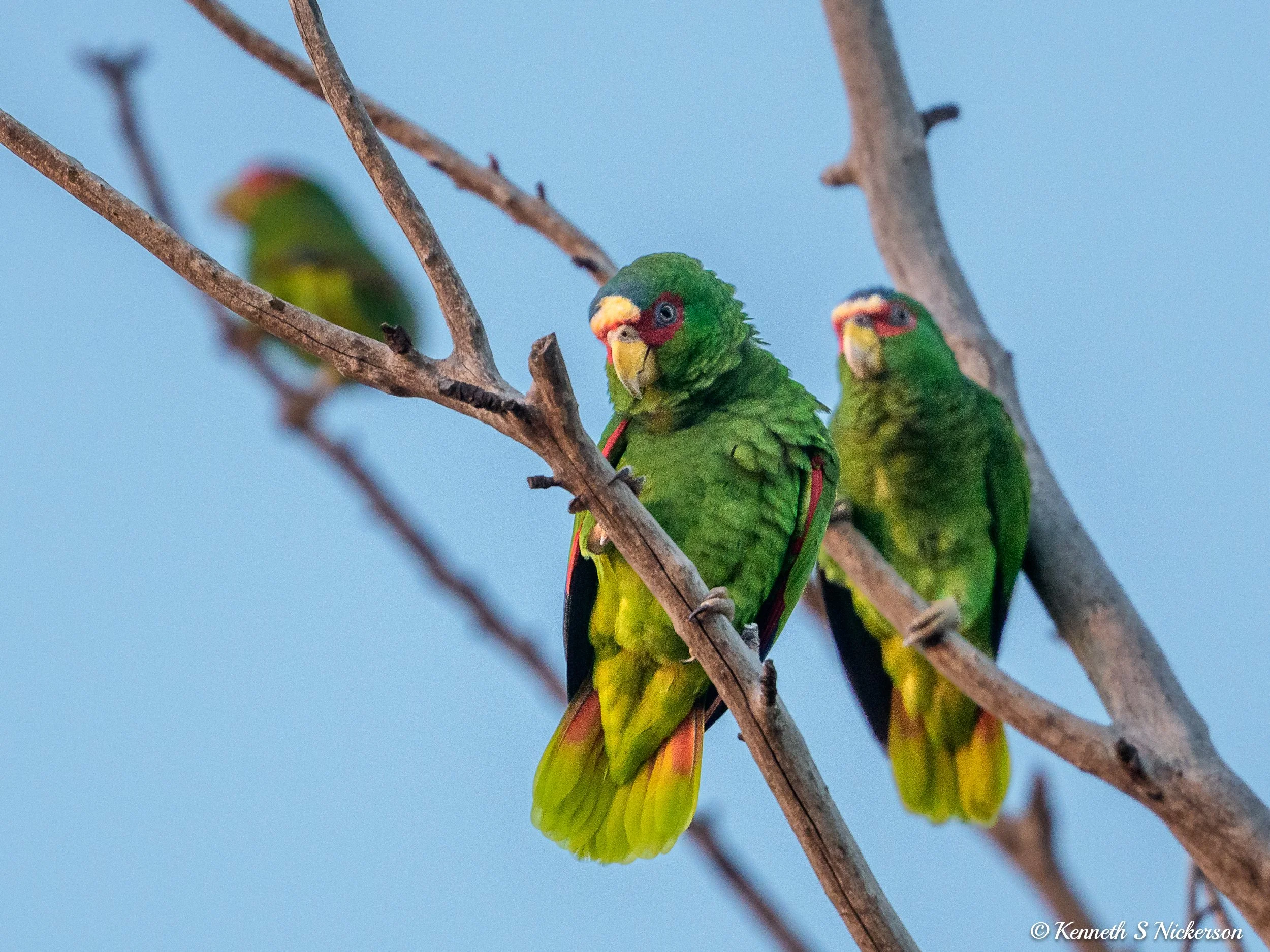
I glanced at my last 3 posts and realized that I had started each day with a photo of a brown bird. So today, I will start at the end of the day with three photos of parrots. This first photo is of White-fronted Amazons. I saw these parrots at a park in Brownsville Texas. Every night shortly before sunset, hundreds of parrots fill the skies and land in the trees for the evening. These White-fronted Amazons were a new species for my life list. They are a Central American bird brought to the area by the pet trade. Escapee and released birds have established local populations. I saw about 20 of these birds in the parrot flock.
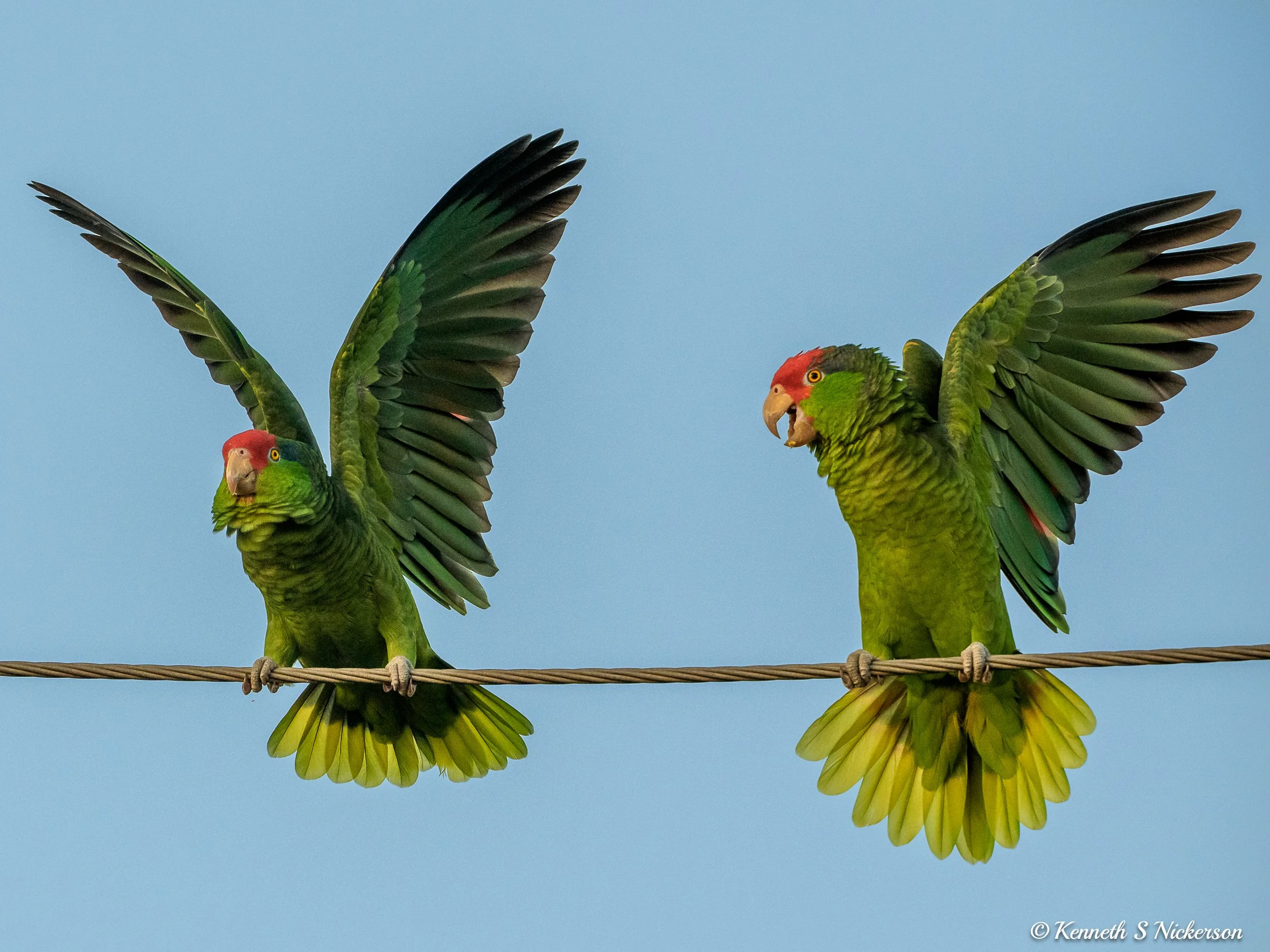
The overwhelming majority of the parrots are Red-crowned Amazons such as these. I had seen Red-crowned Amazons when I visited San Diego in August.
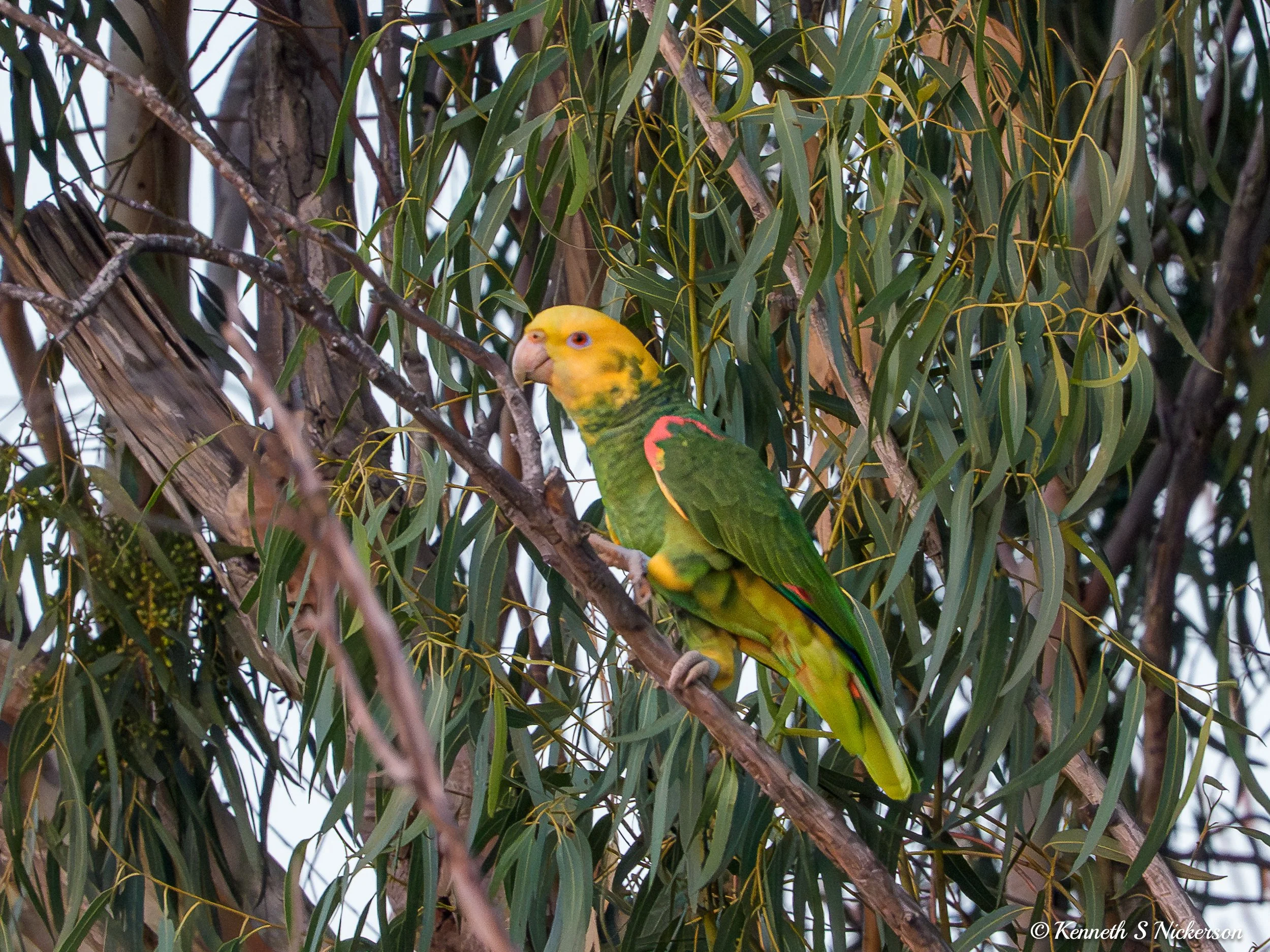
The third species of parrot I saw were 3 Yellow-headed Amazons. These are considered “escapees” by eBird since they have not yet firmly established a stable local population.
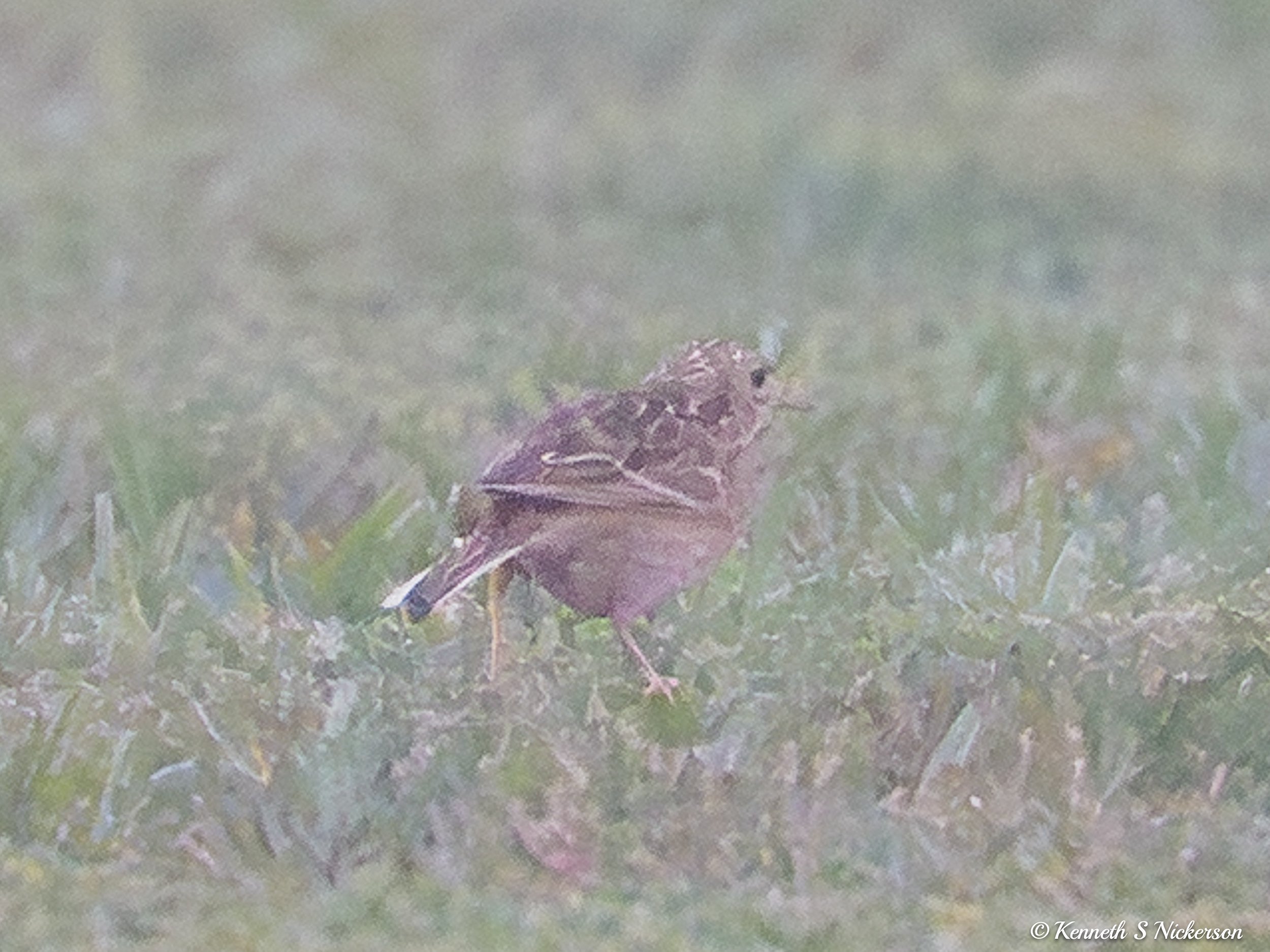
I started my day meeting Evan at a sod farm east of my hotel to look for a Sprague’s Pipit. It was quite foggy and the light was rather limited which made searching very tough. Eventually, off in the very far distance, I spotted one. Evan verified its identity both by its call and by looking at it through his spotting scope. I was able to get this extremely distant photo that reminds me more of an impressionistic painting than of a photo.
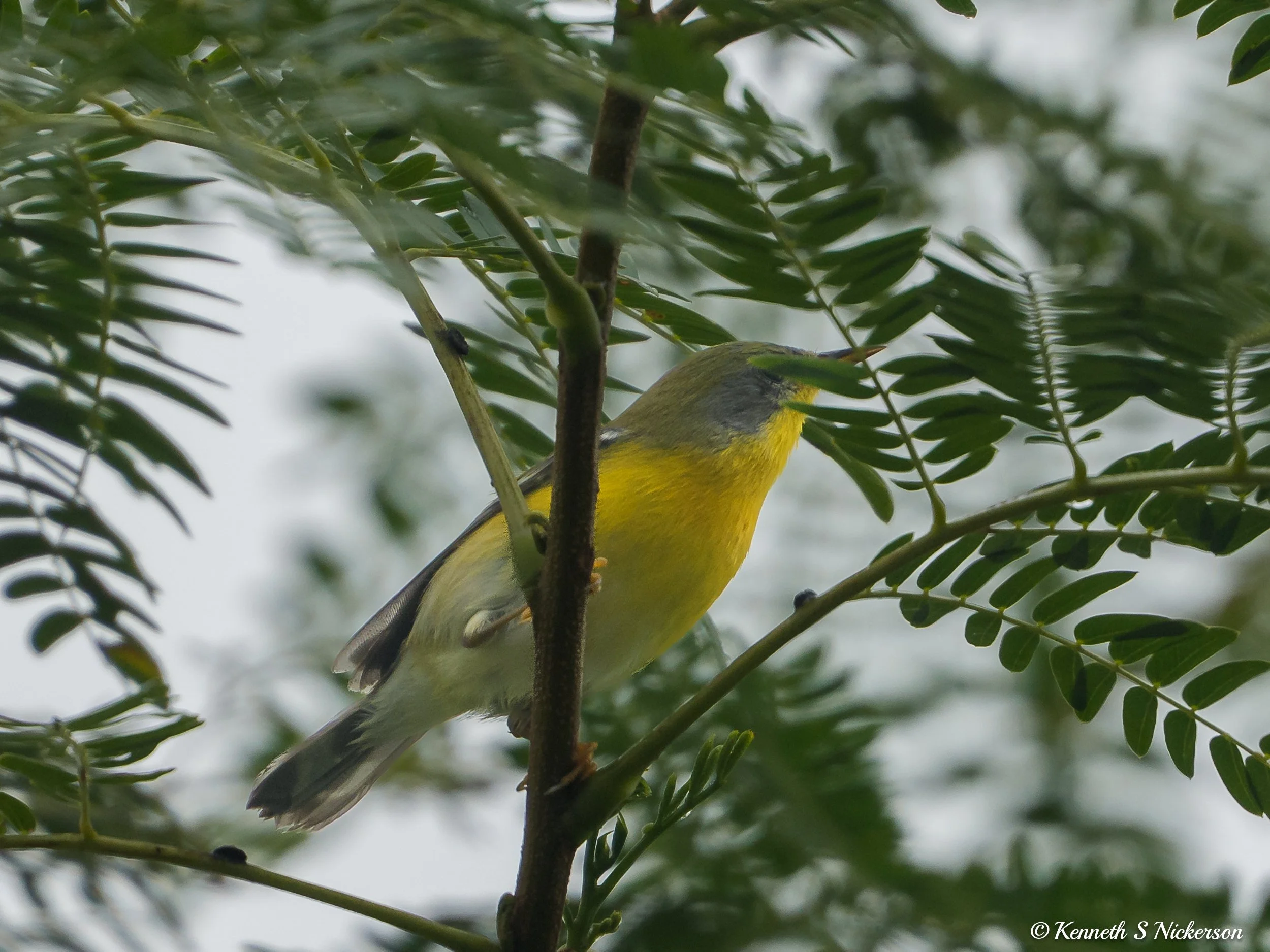
Next we went further east to Los Fresnos Nature Park to search for a rare Tropical Parula which had been seen there over the past week. When we arrived, Evan’s boss Tiffany was already there with a group of about 10 birders from New York, New Jersey and New England. Collectively, we all spread out searching for the Tropical Parula within mixed flocks of warblers. Ultimately, Tiffany was the person to find the male which had been reported as well as a female which was new. As always, photographing warblers can be quite tricky as they are constantly moving from branch to branch.
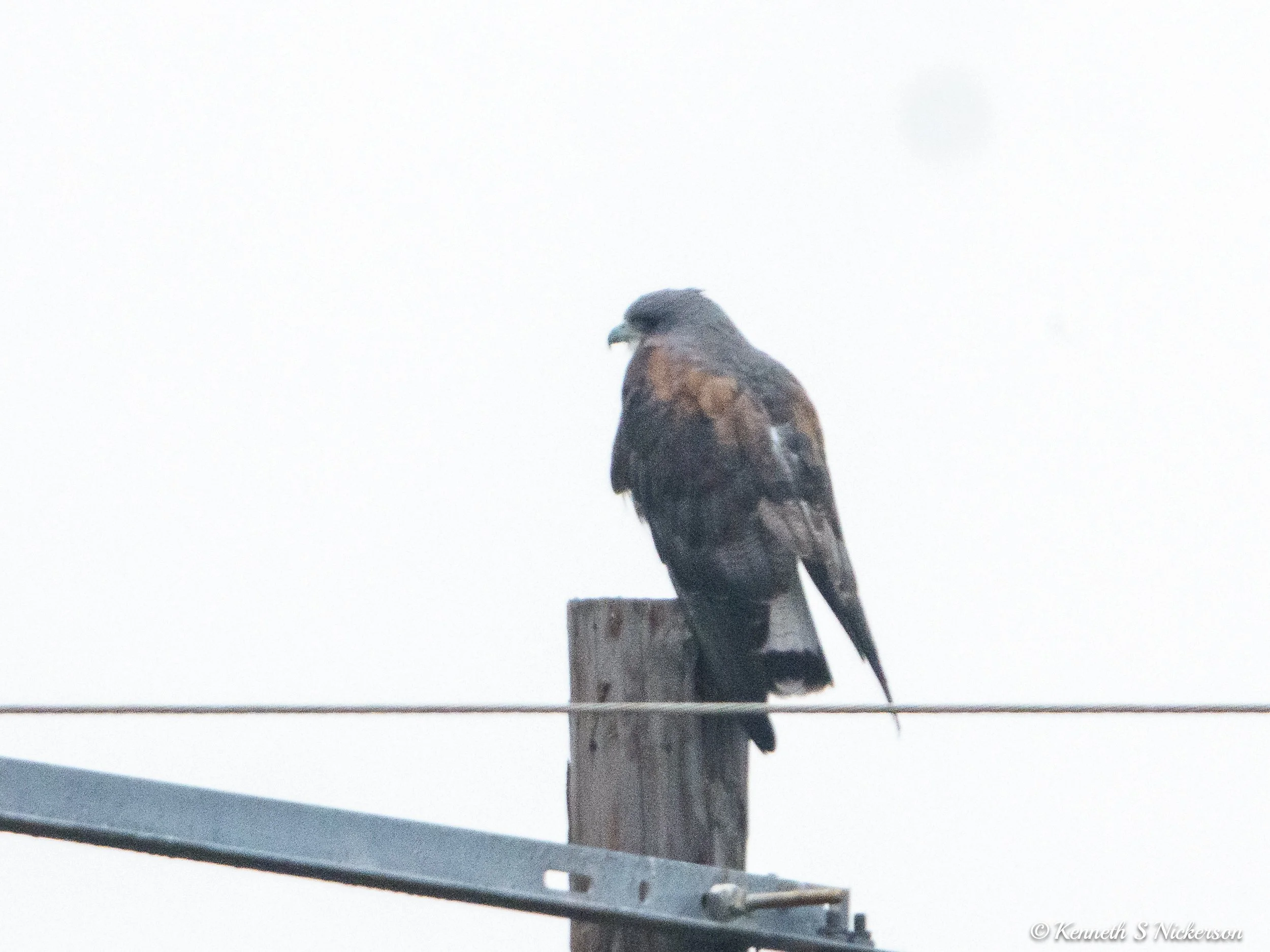
Next we headed out towards South Pedro Island. There were utility poles parallel to the highway as we drove. Frequently, we would see raptors sitting on the tops of these poles. This is a White-tailed Hawk. It is predominantly a South American bird, but does show up in a number of places in Central America, Mexico, and Southern Texas.
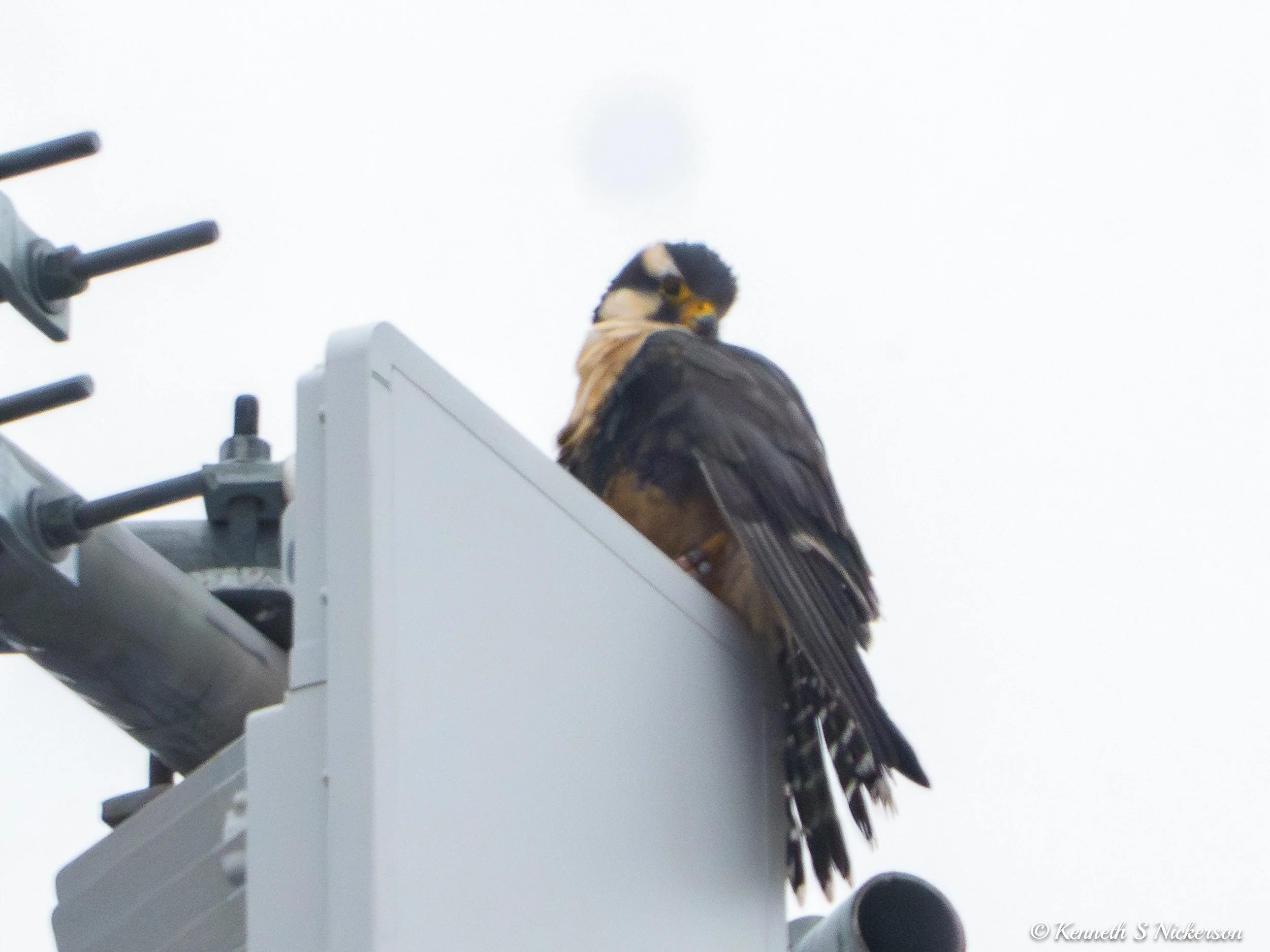
We also spotted this Aplomado Falcon. Like the White-tailed Hawk, it is primarily a South American bird with some locations in Central America, Mexico, Southern Texas and New Mexico.
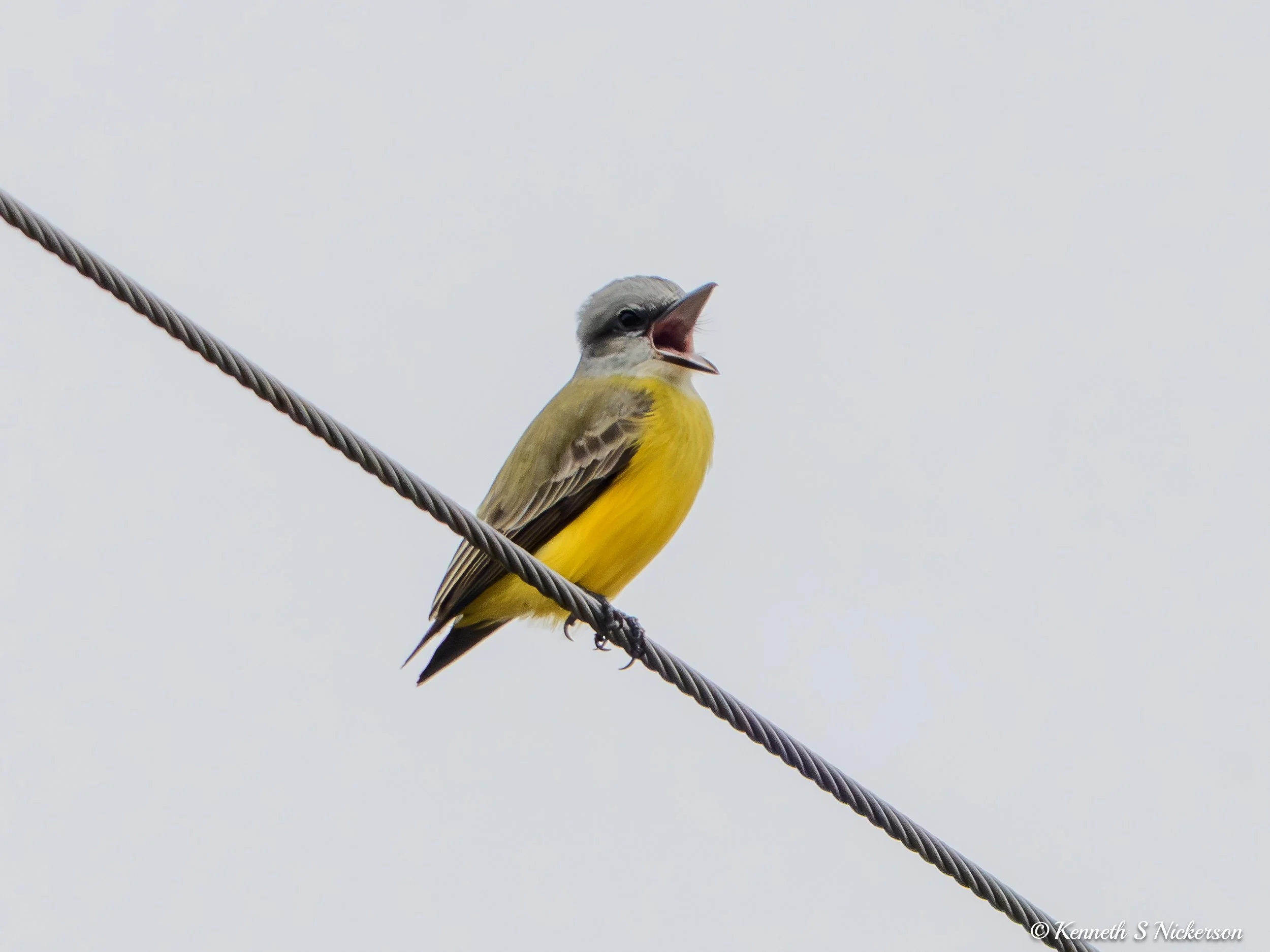
The final bird I photographed along the road was this Couch’s Kingbird. Mostly a Mexican and Texas bird, it can be found at least occasionally in virtually every southern state and has even been spotted twice in Massachusetts.
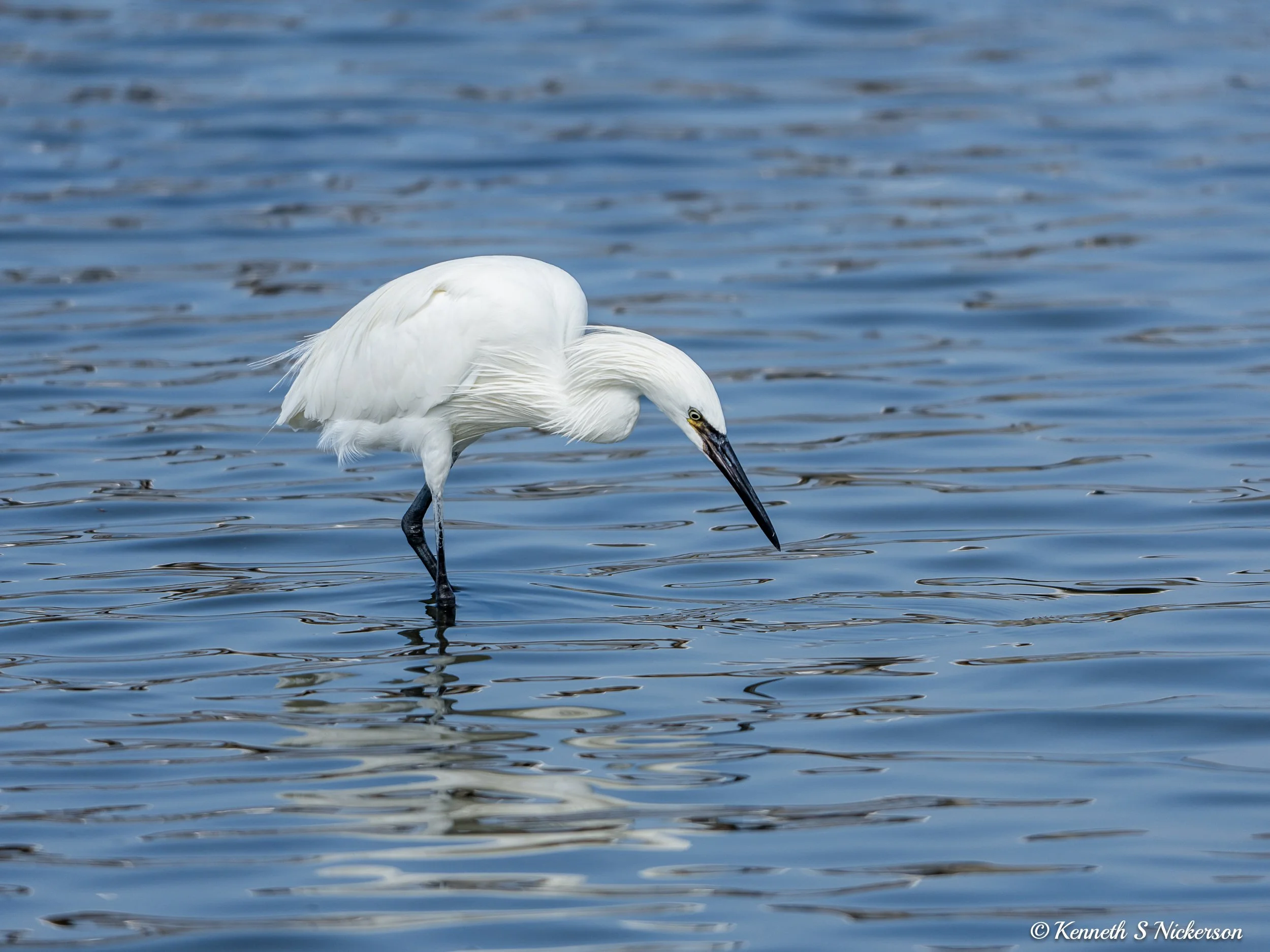
Once on South Pedro Island, we headed to the Birding and Nature Center. Our primary targets were the Mangrove Yellow Warbler and the Least Bittern. Initially, we walked through the mangroves, but had no luck with the Mangrove Yellow Warbler. Next we walked along the water as we headed to the marsh area to search for a Least Bittern. Here Evan pointed out this Reddish Egret. Now with my keen eyesight and astute mind, I noted that the bird did not look “reddish” at all. This is an adult white morph. Morphs are different colorings that occur within various bird species. The Reddish Egret I had photographed in San Diego was the much more common dark morph, with gray body feathers and a reddish neck. So while not a new species for me, this bird was a new morph.
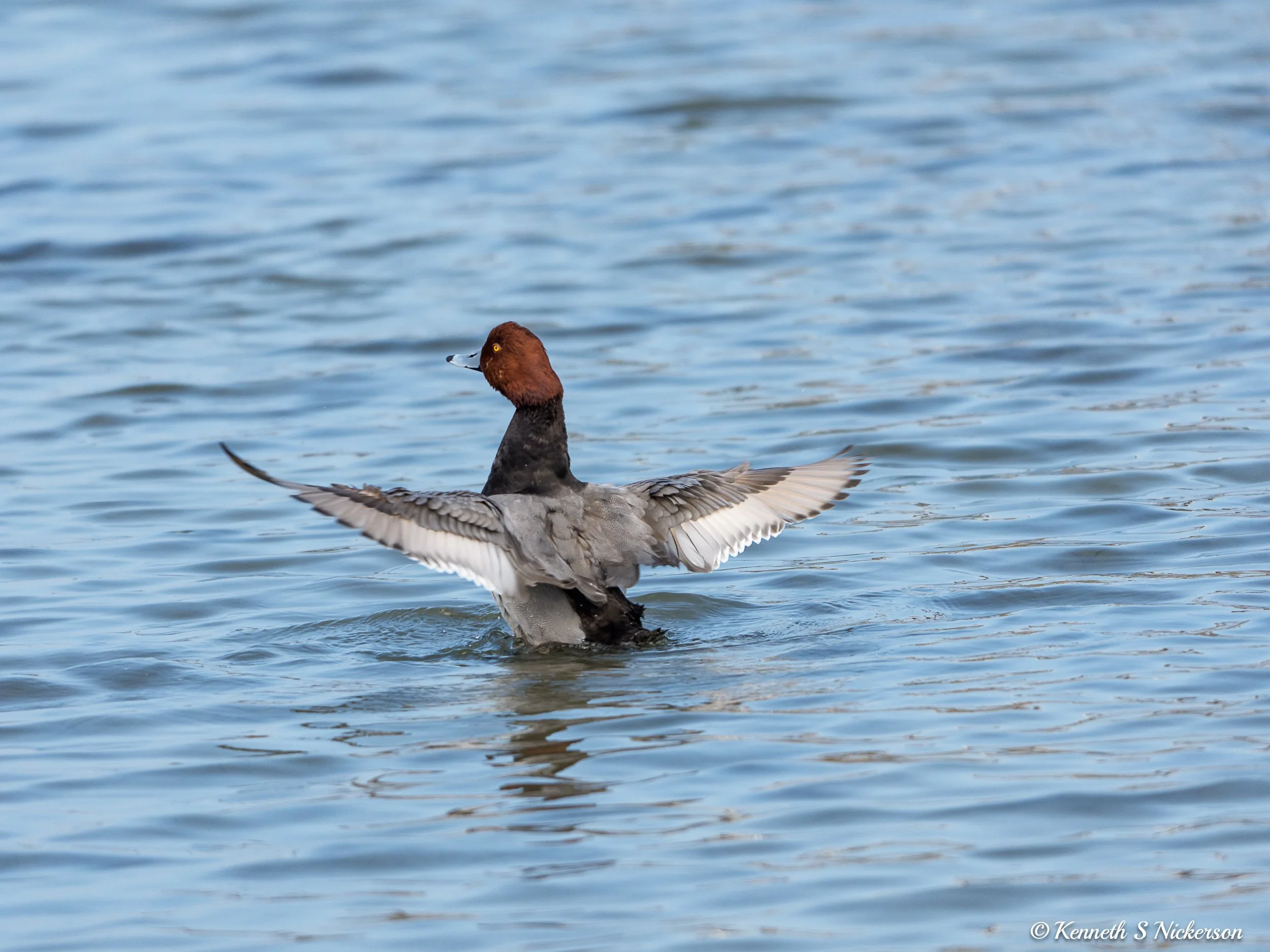
In the water were lots of Redheads. About half of the total wintering population of Redheads in the US winters in the nearby waters.
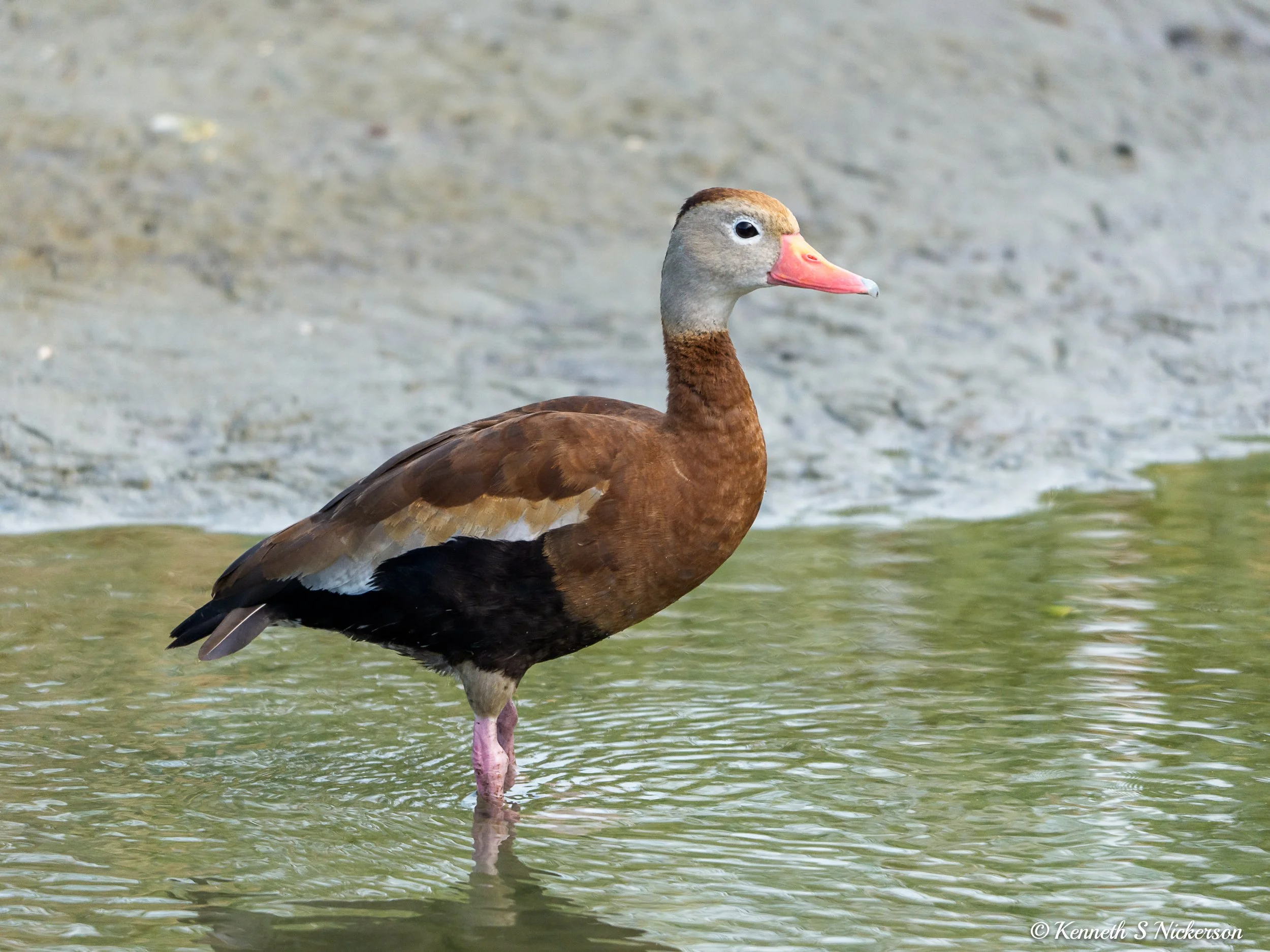
A Black-bellied Whistling Duck posed for a portrait as we headed to the marsh area.
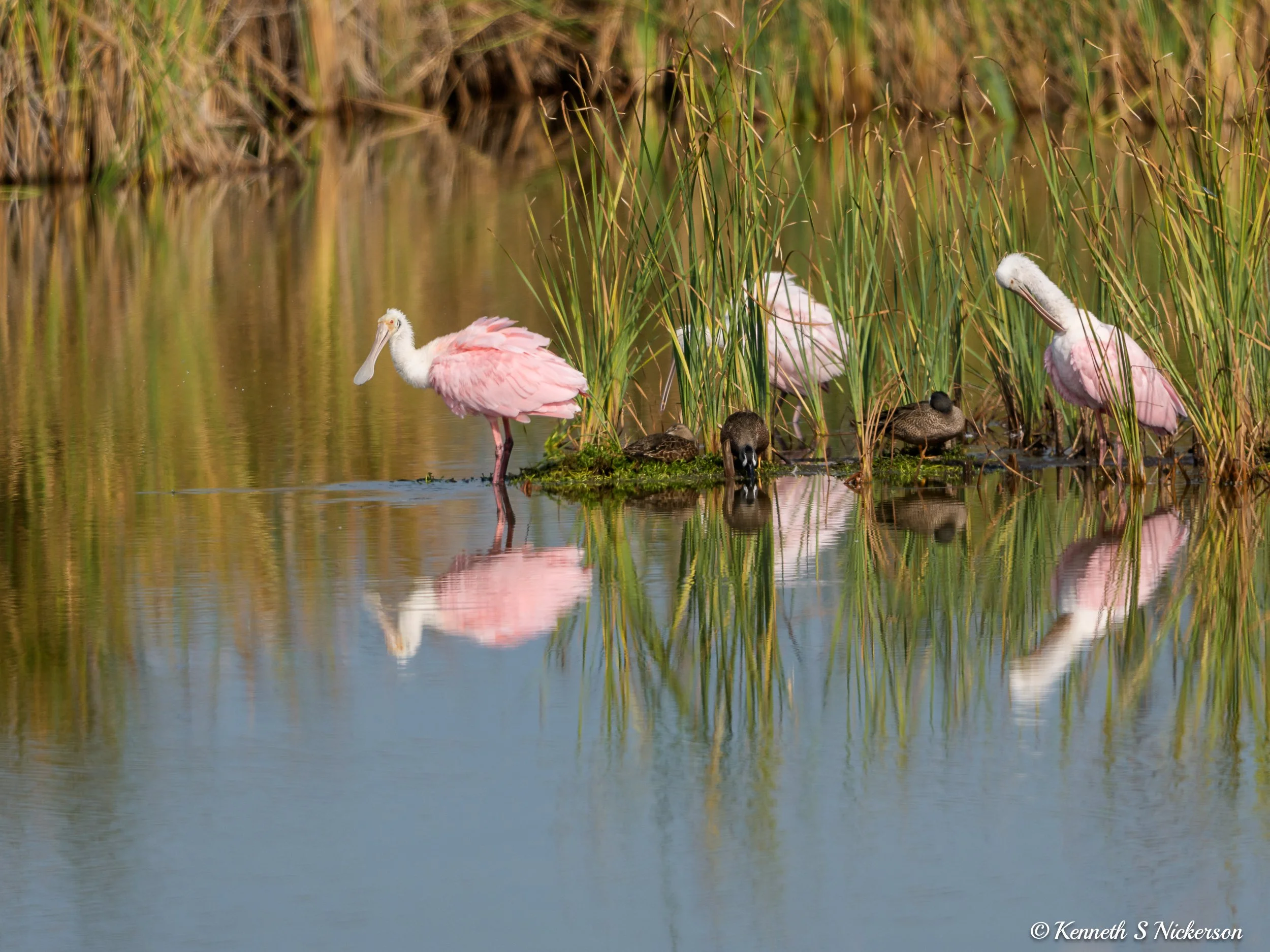
Several Roseate Spoonbills groomed themselves and searched for food in the shallows.
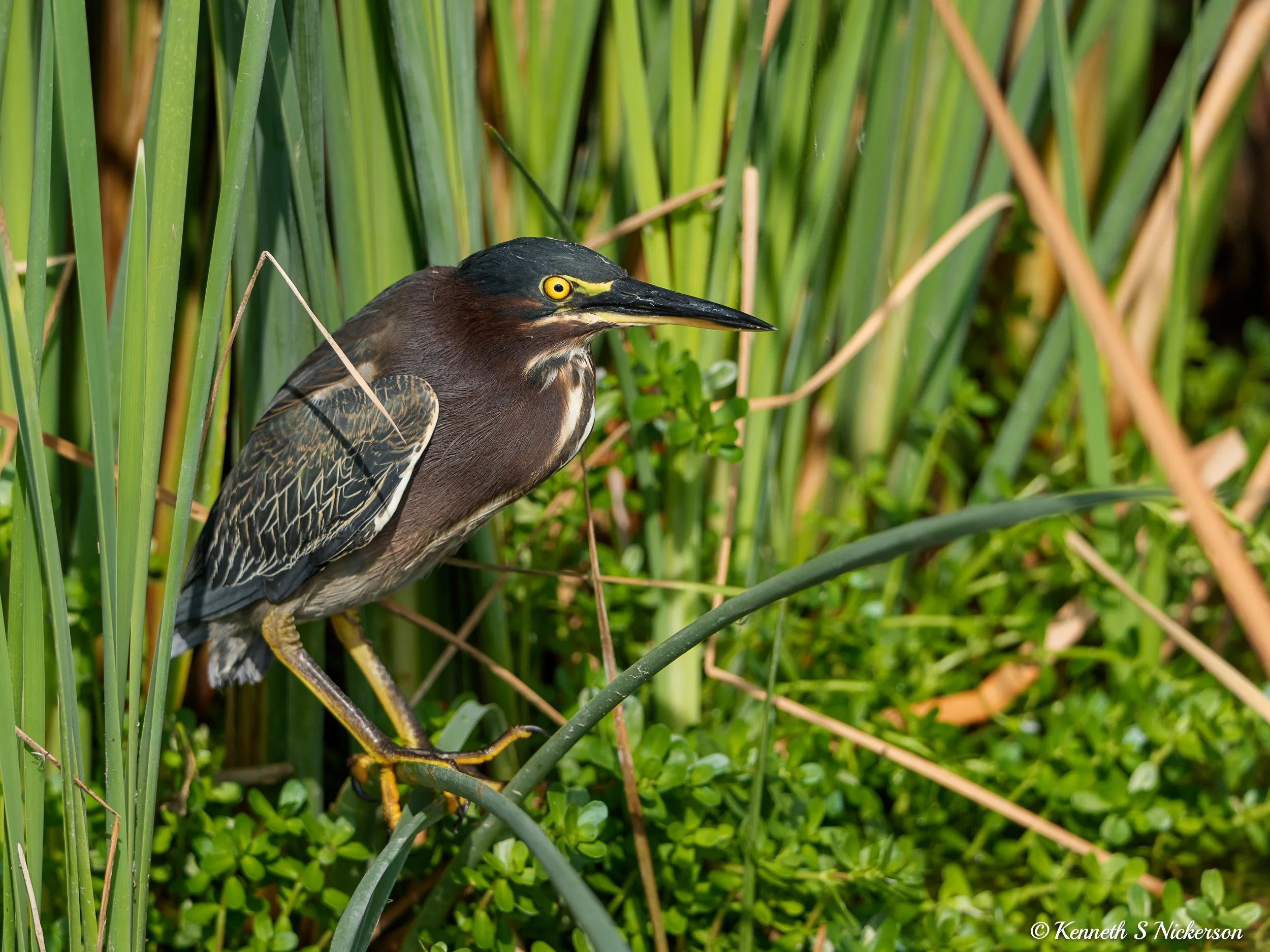
In the marsh area, I saw this Green Heron. The Least Bittern we were looking for appears similar, but is smaller and tends to remain more in the marsh reeds.
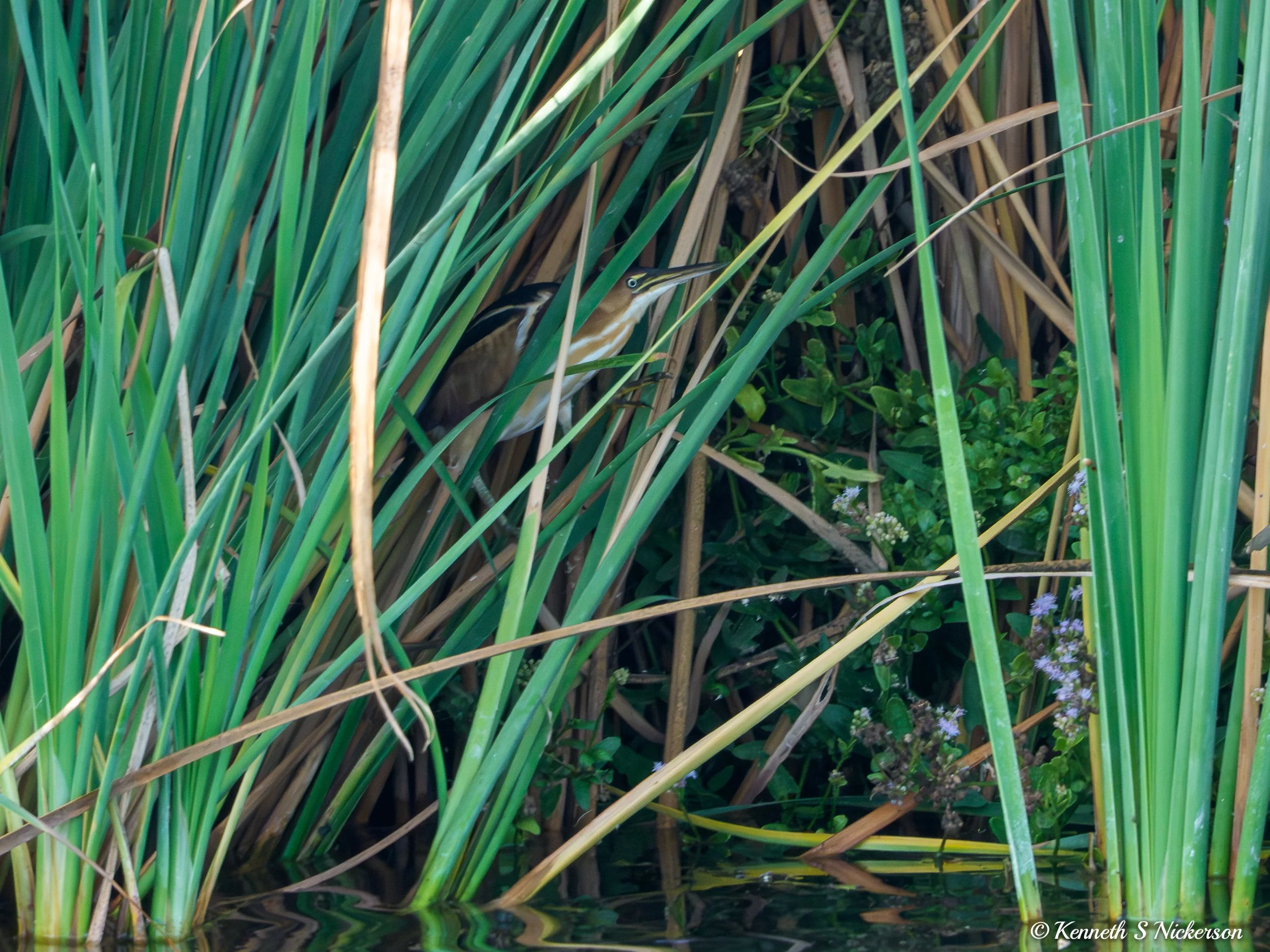
We spend perhaps 30 minutes searching for a Least Bittern. Three separate times, Evan briefly spotted one in deep the reeds, but I was unable to see it before it disappeared. Finally, on the 4th time, I was able to see it and get this photo as it was momentarily visible through this gap in the reeds before vanishing again. This ended my time with Evan, but I stopped at the parrot roost as described above on my way back to the hotel.