Mauthausen Concentration Camp
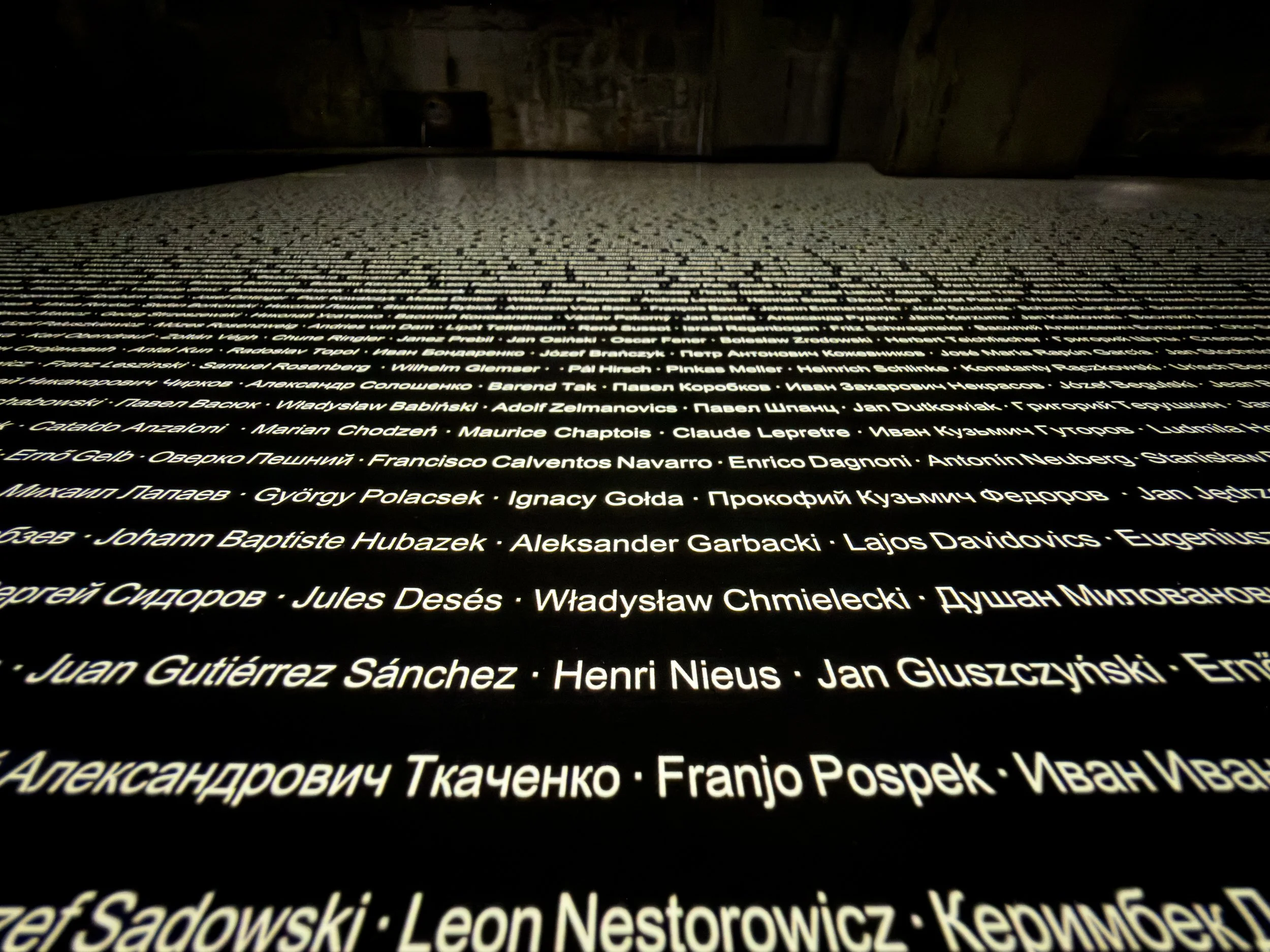
This photo shows a tiny fraction of the 81,000 names of individuals known to have died or been murdered in the Mauthausen Concentration Camp and its network of subcamps between 1938 and 1945. These names are displayed on many black glass panels in the Room of Names. Researchers now have over 84,000 names. The total deaths are estimated to be at least 90,000 people.
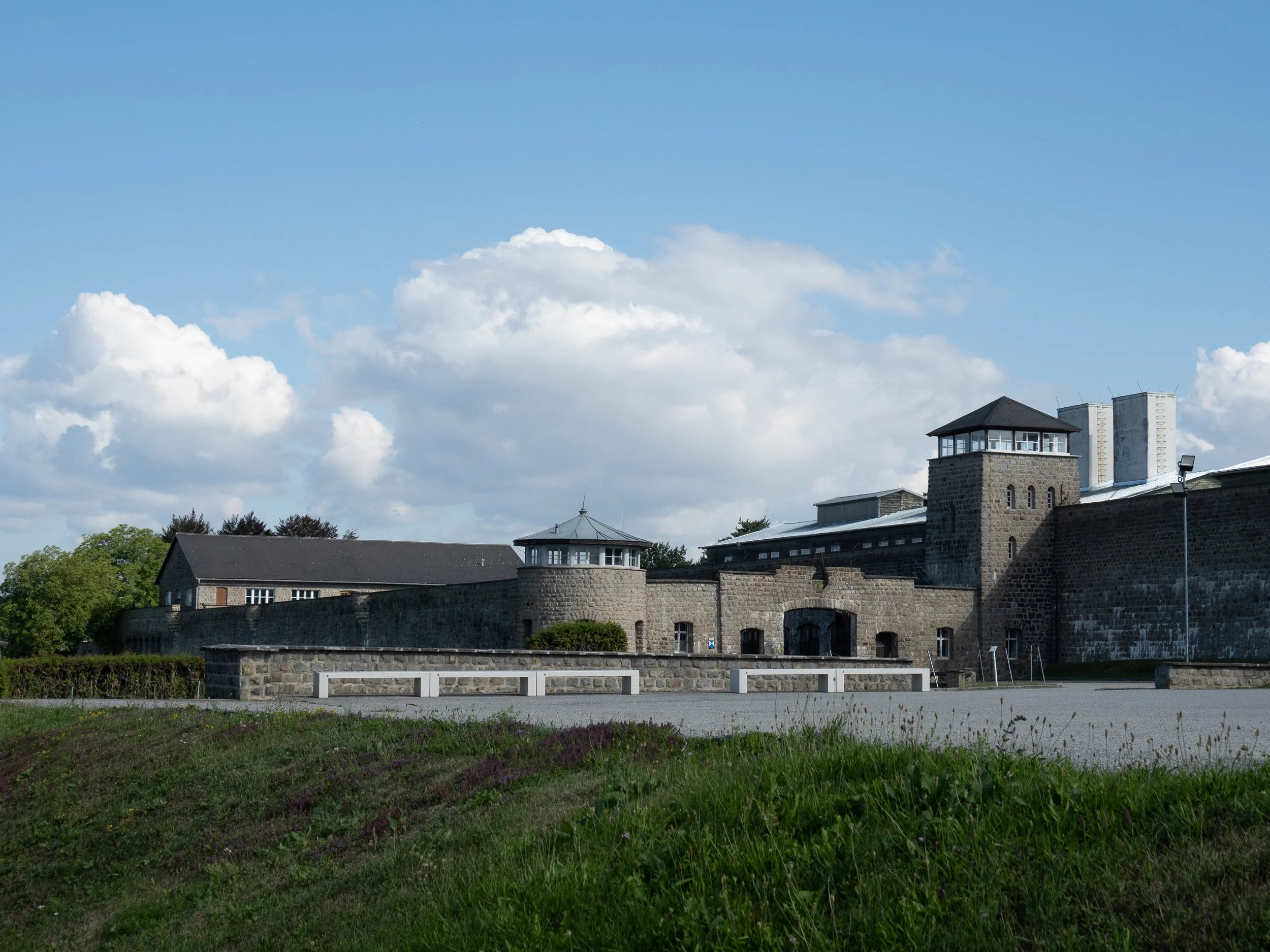
Mauthausen Concentration Camp was begun in August 1938, just a few months after the annexation of Austria by Germany. Most of the prisoners were from Poland and the Soviet Union; however, records show prisoners from 40 different countries.
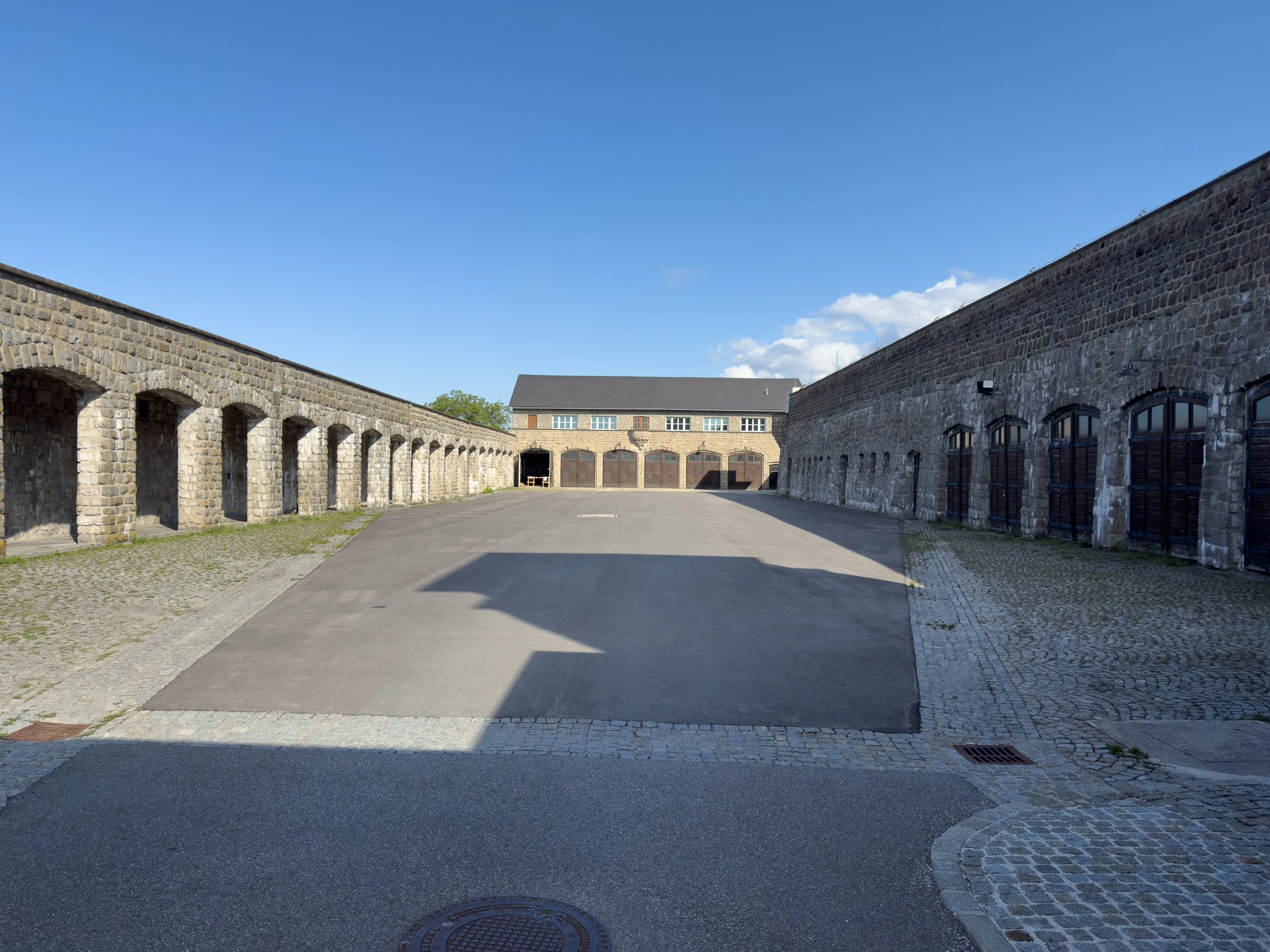
Mauthausen Concentration Camp and its subcamps were hard labor camps. There initial focus was on mining granite from the nearby quarries. Prisoners were forced to carry blocks of granite weighing up to 50 kilos (110 lbs) up stairs to the camp. Those stairs were known as the “Stairs of Death” by the inmates. Inmates were sometimes killed randomly and for sport by the SS by being pushed over the edge of the quarry to fall to their death. The SS referred to these individuals as “parachutists”.
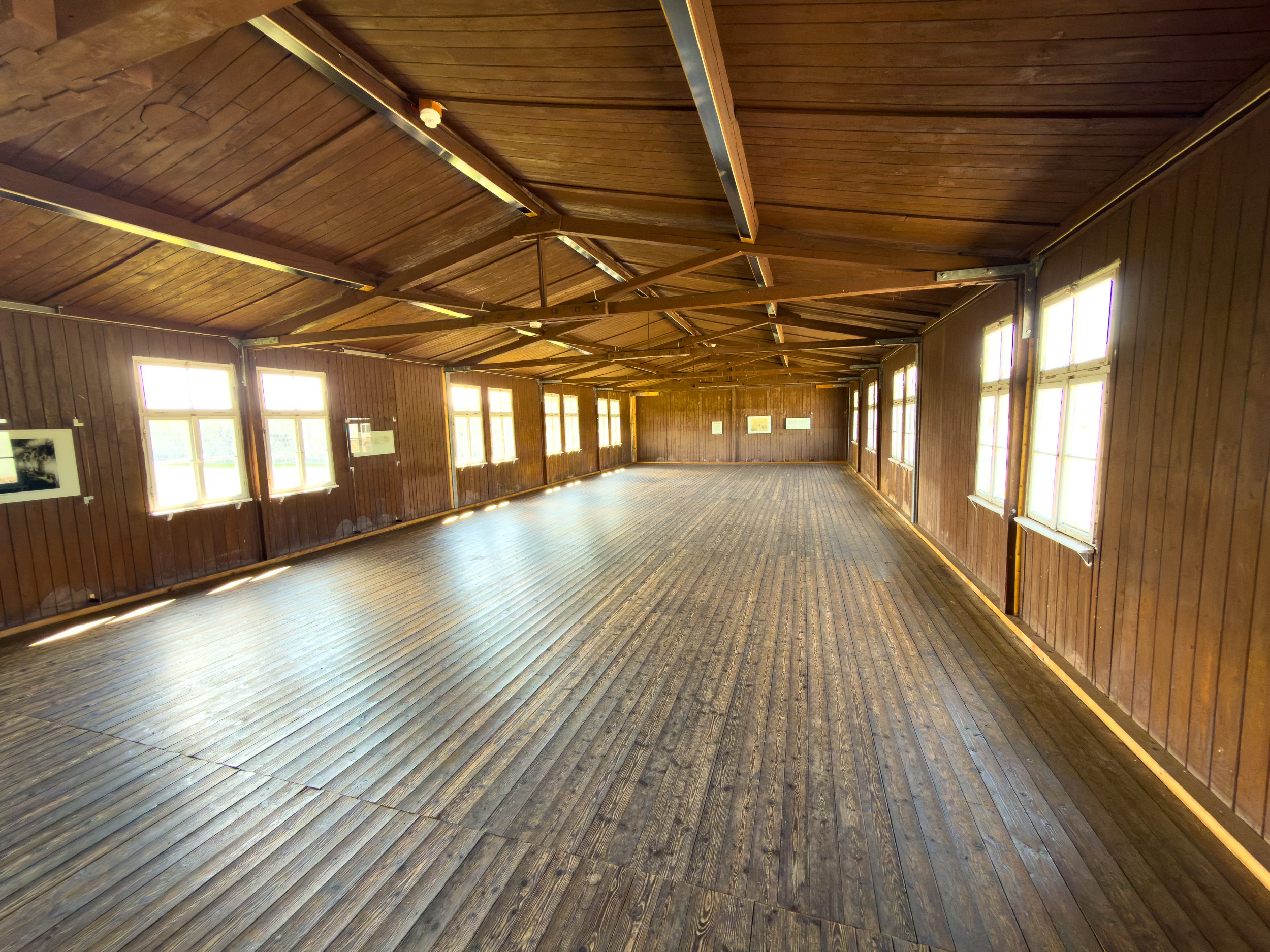
This is a photo of one of the prisoner barrack rooms. This room was designed for about 150 people, but was often full with as many as 400 prisoners with at least 2 to a bed.
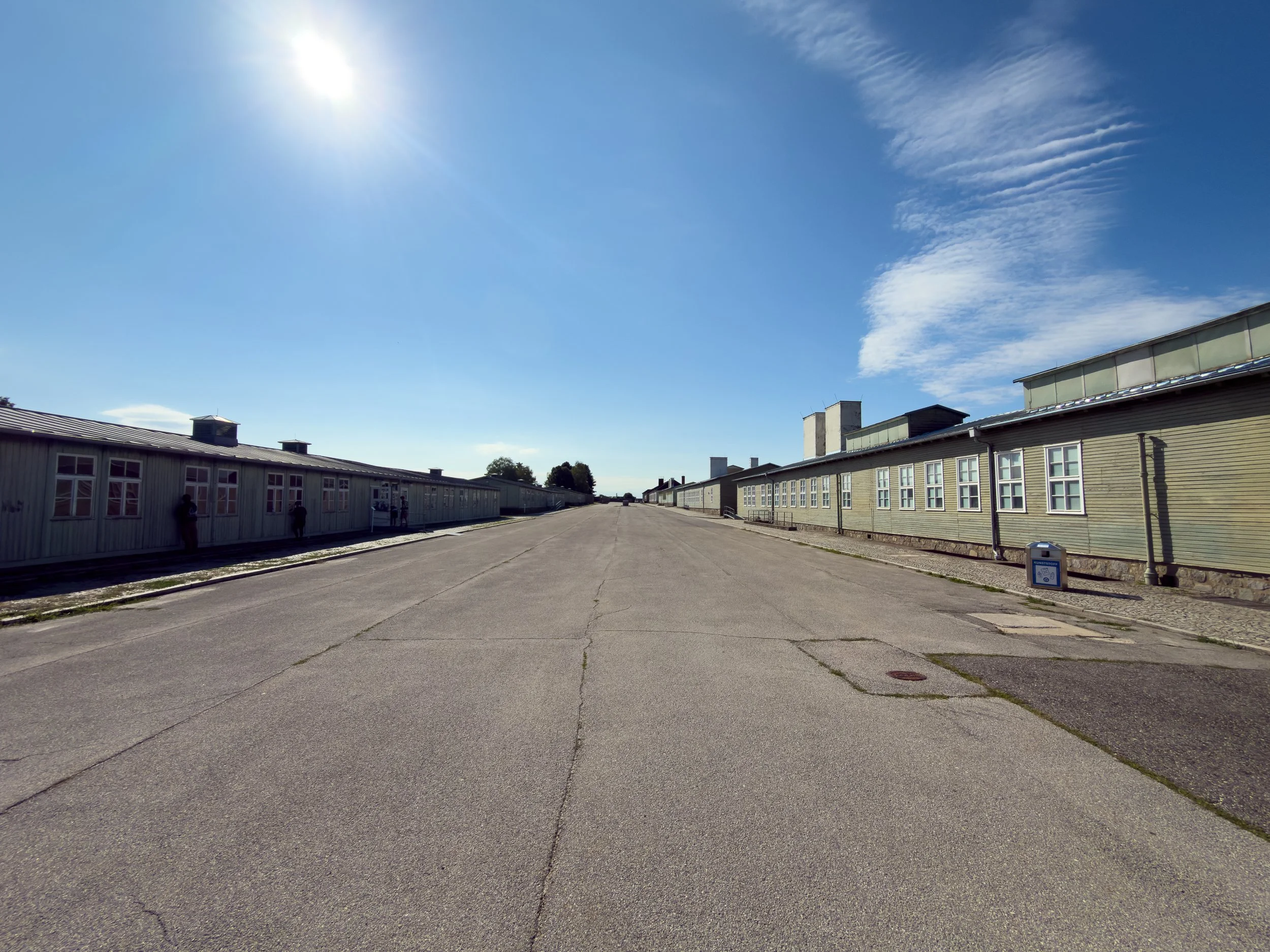
Some of the prisoner barracks are on the right while the infirmary, kitchen, and laundry buildings are on the left. The infirmary was used only for a very few important prisoners with specific useful skills. The seriously ill and those unable to work were considered useless, and if they entered the infirmary, it was generally for medical experiments or to be gassed and cremated.
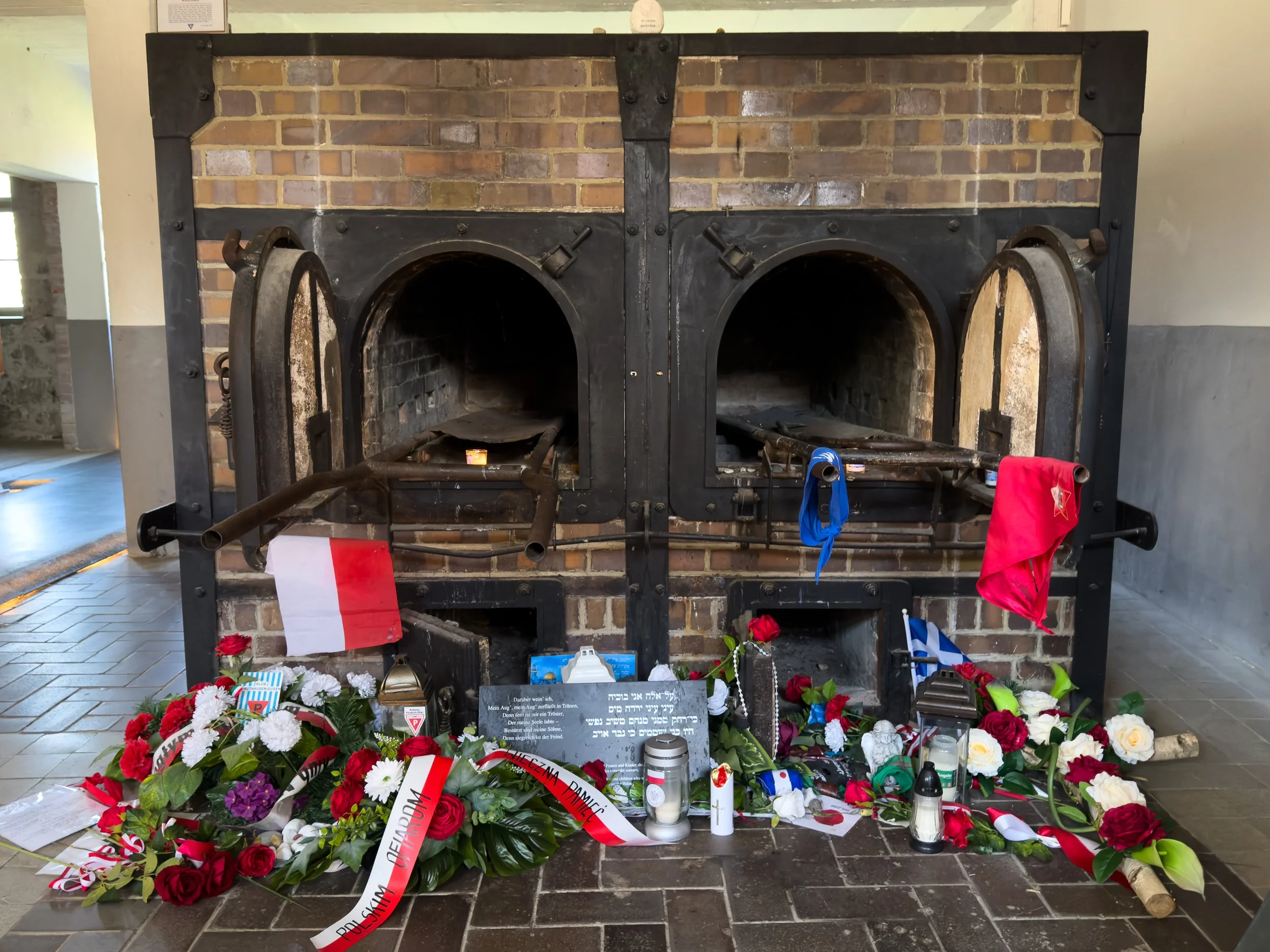
At least 3,455 inmates were known to have been gassed here with Zyklon B. The gassing chamber and the crematorium were in the cellar of the infirmary.
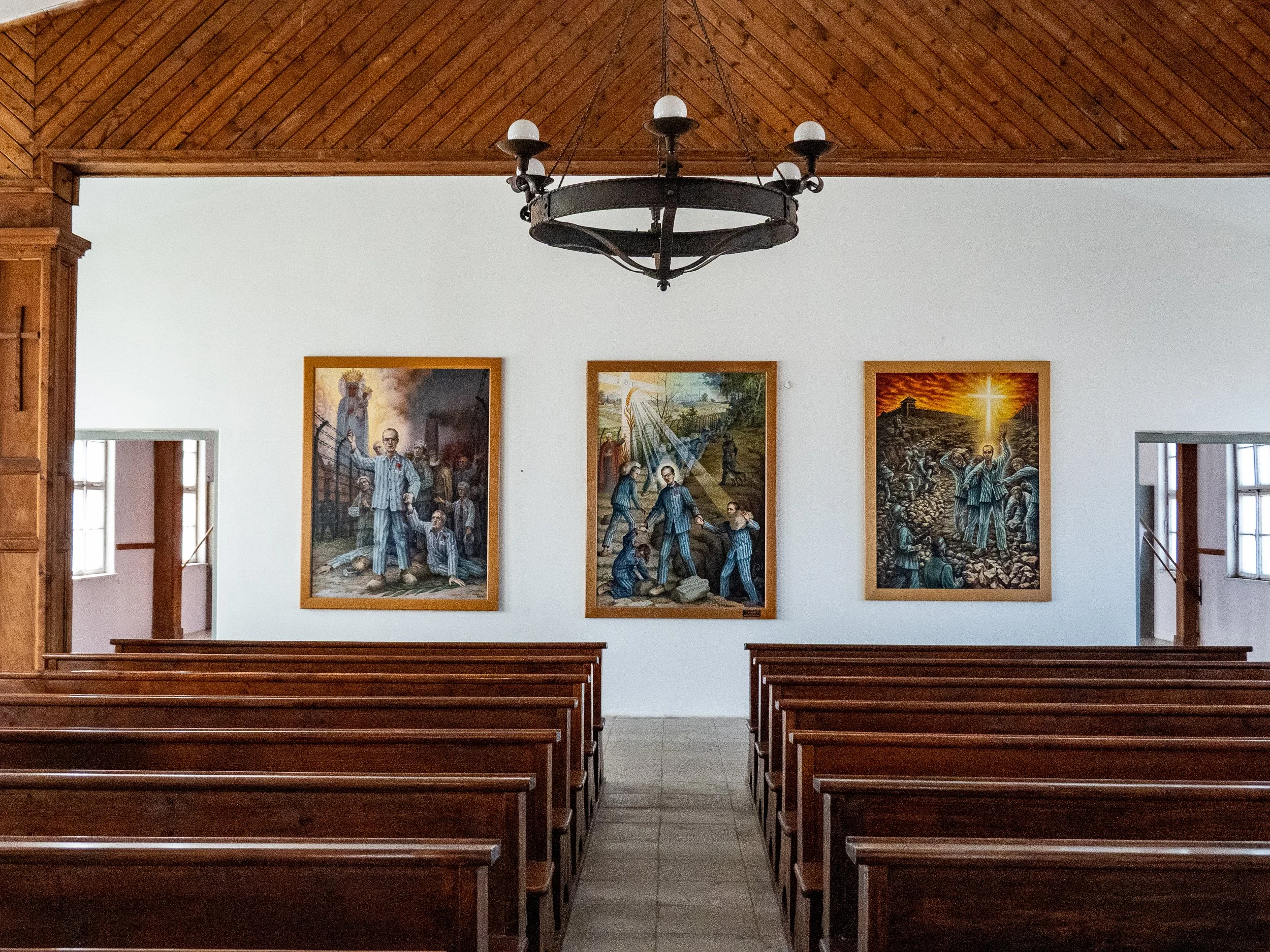
A chapel was built in the camp following the war. Not much is known about the paintings shown above. The general interpretation is that the left panel shows prisoners bowed under the weight of persecution and forced labor, the center panel shows a Christ like figure among the prisoners, and the right panel suggests spiritual liberation and salvation. I found myself thinking about the clearly Christian imagery here. Mauthausen was originally built as a forced labor camp for political prisoners and enemies of the Reich. Because of this origin, rather than as a death camp such as Auschwitz, it is estimated that only 13-15% percent of the prisoners were Jewish. They did die at a higher rate since they were given the worst shelter, minimal clothing, and the least rations.
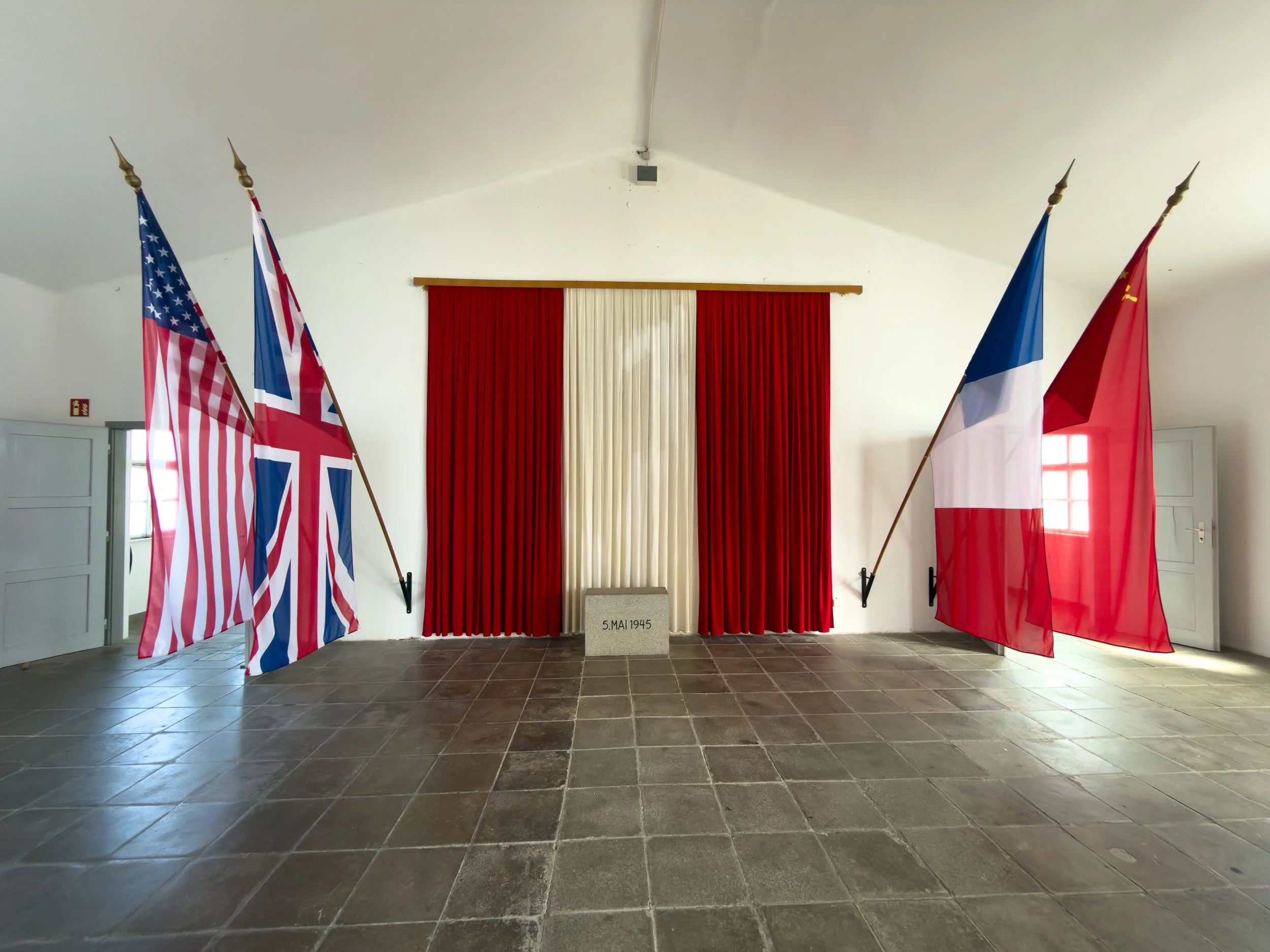
US troops arrived at Mauthausen on May 5, 1945 to free the prisoners. Sadly, there were a number of prisoners who were in such poor health that they died in the camp following “Liberation”. Only a few of those responsible for the atrocities here were ever brought to account in courts following the war.
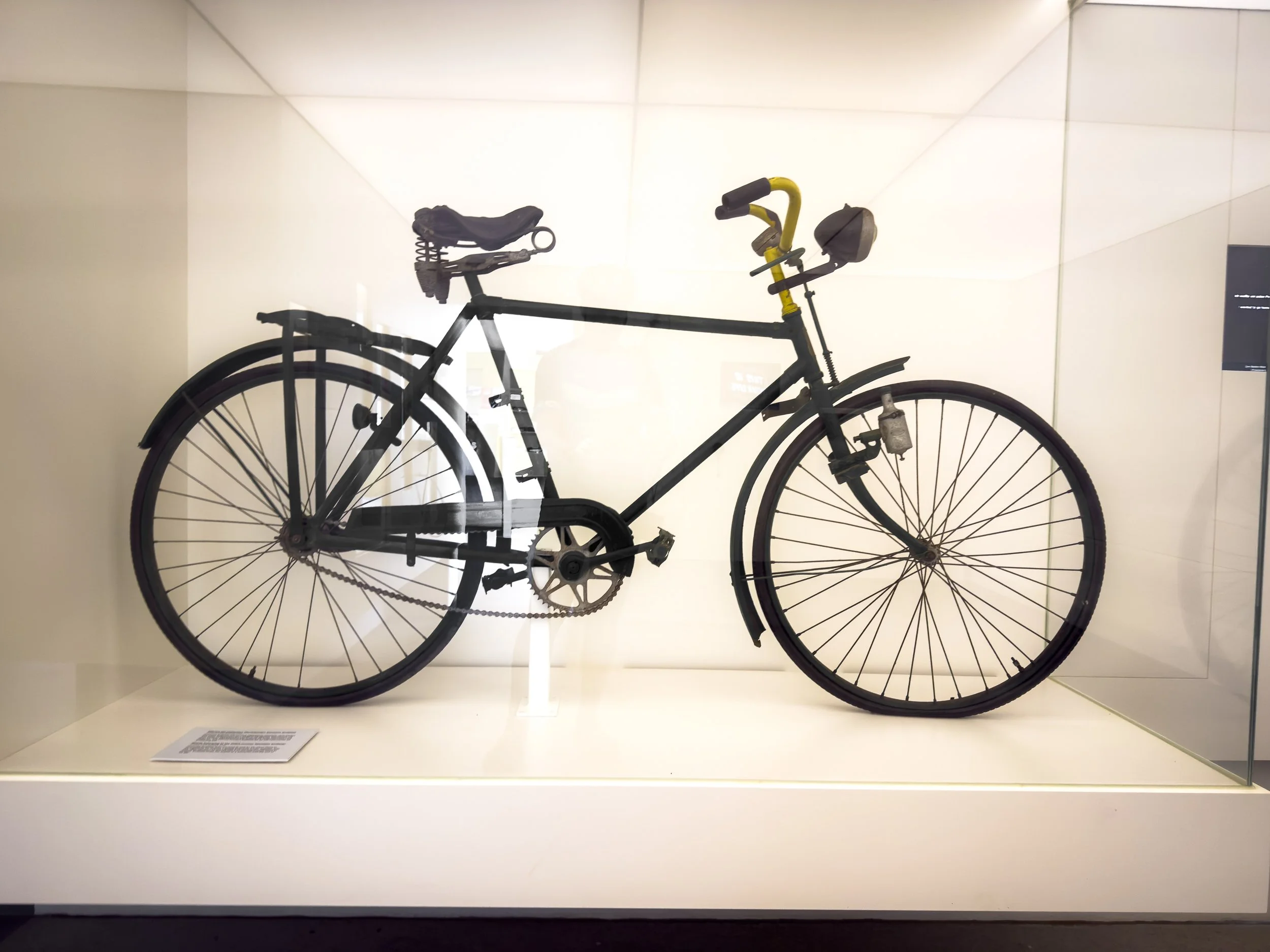
I would like to finish this post on a more positive note. This bicycle belonged to the Polish survivor Stanistaw Kudliński. Stanistaw, 30 years of age, was in comparatively good health when the camp was liberated on May 5, 1945. He had been arrested in 1942 because of his resistance activities with the Polish group Szare Szeregi (“Gray Ranks”). Following his liberation, he walked to Linz with some fellow prisoners where they were sheltered by nuns. A nun gave Stanistaw a bicycle which he used to make the 1000 km trip back to Poland. Over the years, Stanistaw regularly returned for commemorations at Mauthausen. He meticulously maintained this bicycle until he died in 2010 at 95 years old. His daughter donated the bicycle to the museum at Mauthausen.
When I told bits of this story to my daughter Michaela over FaceTime this afternoon, I found myself struggling to speak because of the waves of emotion rippling through my body. I found the immense contrast between Stanistaw Kudliński and my bike journeys, and our respective lives leading to our bike journeys, excruciatingly sad and overwhelming. Nonetheless, it also brought me some joy knowing that this man, whom I have no connection to other than seeing his bicycle, was able to cycle home to Poland, marry, have a daughter, and live to 95 years old. I hope his subsequent 65 years were full of love and joy.